Inherited a vintage amp or hi-fi collection: what it's worth and how to sell it
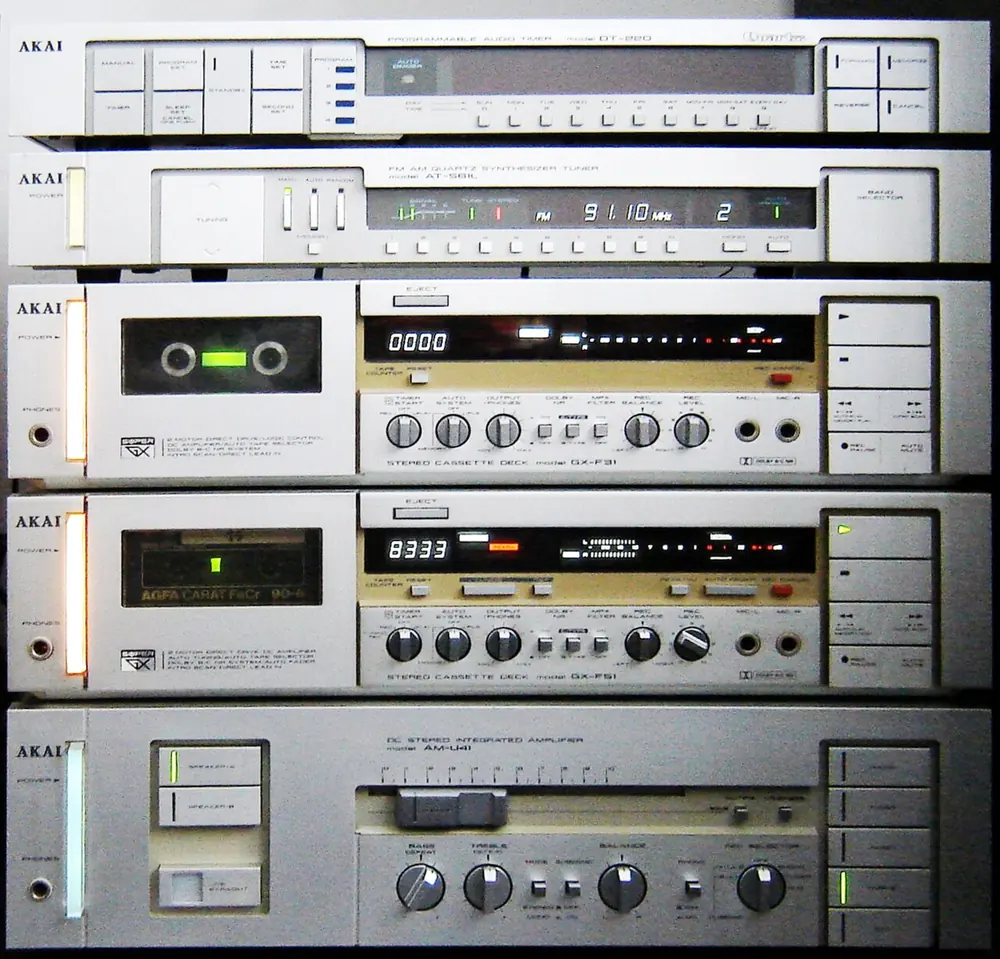
The calls we get about inherited gear tend to start the same way. Someone is clearing a parent's house, opens a closet or a basement corner, and finds a stack of silver faceplates, two heavy boxes with tubes sticking out of the top, a guitar amp under a blanket and, sometimes, an organ nobody has played since the 1980s. The question is always some version of "is any of this worth anything, and who do I even call?"
Usually some of it is. Rarely all of it. And the order in which you do things matters more than people expect, because most of the value lost in these sales is lost in the first week.
Before anything else: leave the power switches alone
It is tempting to plug each piece in to see what works. Don't. An amplifier that has been stored for twenty or thirty years has electrolytic capacitors that may have dried out, and switching it on cold can short a capacitor or a rectifier and cook the power transformer. A dead capacitor is a cheap repair. A burnt transformer on a collectible amplifier is the difference between a good price and a parts price. Our guide to checking an old tube amp explains the slow, safe way to power one up; if you are only selling, you do not need to power anything up at all. Buyers expect untested equipment from an estate and price it accordingly. They do not forgive a transformer that smells of burnt varnish.
Leave the dust on, too. Do not spray anything into the controls, do not polish the faceplates, and do not pull tubes to "check" them unless you are labelling exactly which socket each one came from.
Work out what you actually have
Make a list, piece by piece, before anyone comes to look. For each item you want four things: the maker, the model, the serial number and a photograph of the back panel. On most hi-fi equipment the model and serial are on a plate or sticker at the rear, sometimes underneath. Kit amplifiers from Heathkit, Dynaco or Knight may carry only a model number, and the quality of the build then depends on whoever assembled it.
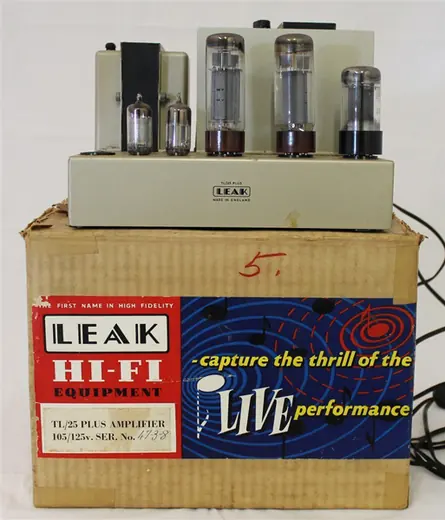
Next, look for paper. Original owner's manuals, schematics, warranty cards, receipts and the original cartons all add value, and they are the first thing families throw away. Check the bottom of the closet, the inside of the cabinet lids and the boxes the gear was stored in.
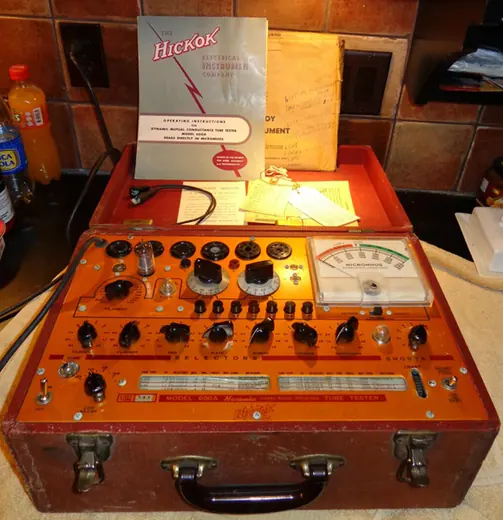
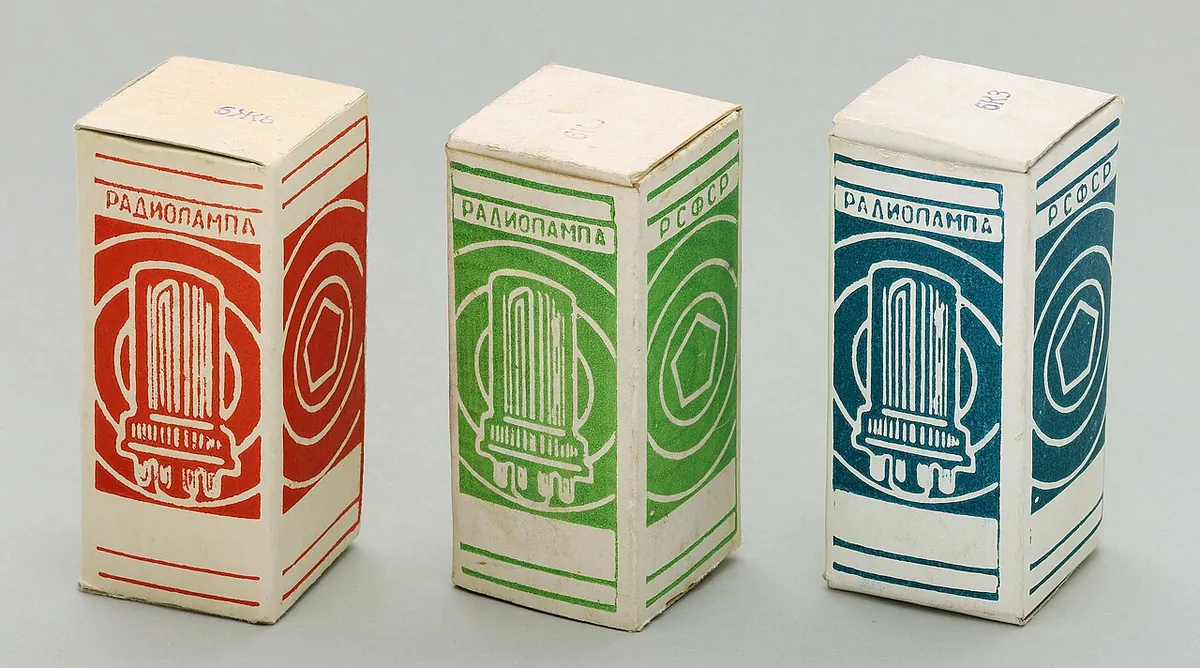
Then the tubes. Write down the printed names on the glass where you can read them: Mullard, Telefunken, RCA, GE, Sylvania, Amperex and so on. Original tubes from respected makers have a value of their own, and boxed spares (a carton of tubes still in their small cardboard sleeves) are often worth more than people assume. If there is a tube tester in the collection, keep it with the tubes; the tube tester guide explains why a buyer will want to know which kind it is.
Dating a piece without paperwork is possible from the parts inside. Most American potentiometers (the volume and tone controls) carry an EIA source-date code stamped on the case: a manufacturer number followed by the year and week. CTS used 137, Stackpole 304, Centralab 134, Allen-Bradley 106 and Clarostat 140. In the 1940s and 1950s the date part was usually three digits, the last digit of the year plus a two-digit week, so 137 852 reads as CTS, 1958, week 52; from the 1960s it was usually four. A pot date only gives the earliest the equipment could have been built, because parts sat in stock for months before they were fitted. Leave that job to the buyer if it means opening the chassis.
What moves the price, up and down
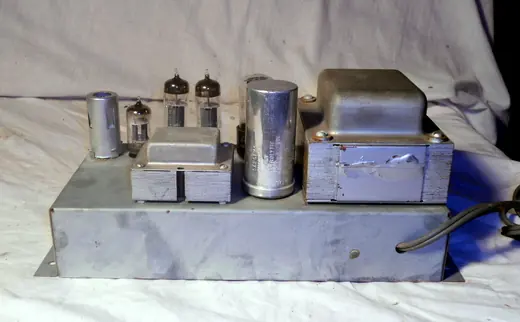
Collectors pay first for the parts that cannot be replaced. On a tube amplifier that means the transformers, especially the output transformers. Original, undamaged iron with no leaking tar holds the value; a replaced or mismatched transformer takes a large bite out of it. After that come the faceplate and knobs (original knobs for some models are harder to find than the amplifiers), then the chassis condition, then the tubes.
Things that raise the price:
- Untouched, original condition, or a restoration with a written record of what was done.
- Complete sets kept together: a matching preamplifier and power amplifier, or a pair of mono amplifiers with consecutive or close serial numbers.
- Original manuals, cartons and receipts.
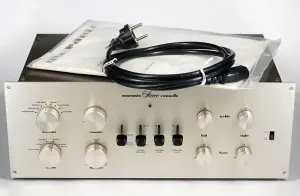
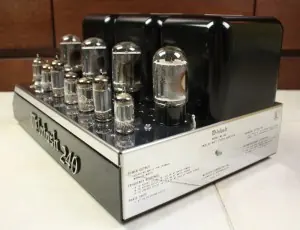
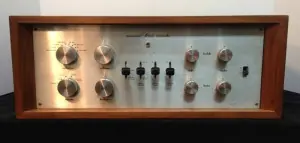
- Names with a collector following. On this site, the Marantz and McIntosh pages give an idea of which models people look for.
- Documented provenance: who owned it, where it was used, a studio or a known musician.
Things that lower it: home "improvements" nobody wrote down, replaced transformers, rust that has eaten into the chassis, broken or replacement knobs, missing covers, and water stains on the underside. A unit built for a different mains voltage is harder to sell locally, though not always worth less overseas.
Watch out for reissues. Some famous designs were remade decades later, sometimes by the original brand. The Marantz 7 reissue in this archive is a good example: the 1990s Classic Series units look very like the originals, and the serial number and paperwork settle which one you have. A reissue is still a valuable piece. It just is not priced as an original, and describing it as one will end a sale badly.
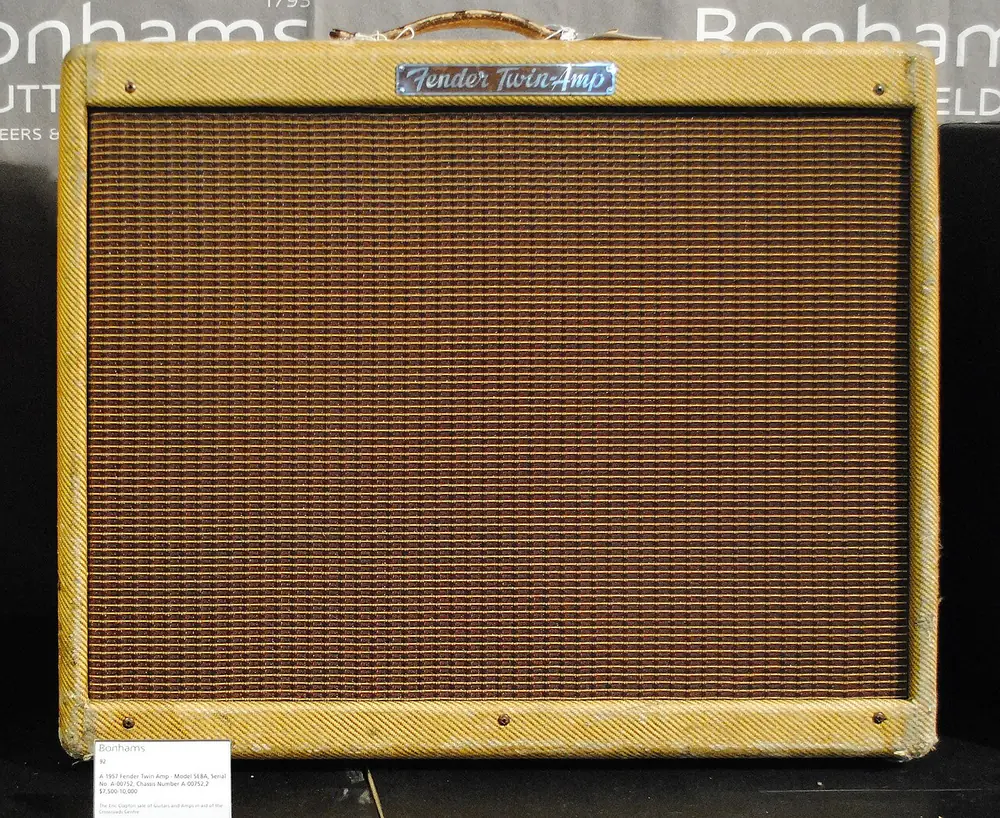
Provenance is the one factor that can outrun everything else. The tweed Fender Twin in the photograph below is a 1957 production amplifier with worn covering and later modifications; it went to auction in 2011 because it had belonged to Eric Clapton. Your father's amplifier probably did not. But if it spent twenty years in a known club, a radio station or a recording studio, write that down and keep any photographs that show it.
Who buys, and what each of them pays for
There are four kinds of buyer for an inherited collection, and they want different things.
Private collectors usually pay the most for a single good piece, because they are buying for themselves. The cost is your time: listing each item, answering questions, arranging inspection and shipping. Collectors also cherry-pick. Offer a famous amplifier on its own and it will sell; the cheaper pieces may sit for months.
Auction houses with musical instrument or technology sales are the right place for genuinely important pieces and anything with provenance. They photograph, describe and market the lot. In return they take a commission from you and charge the buyer a premium, and sales happen on their calendar, which can mean waiting months. Ask for the full fee schedule in writing, including photography, insurance and any charge for unsold lots.
Repair shops and restorers buy amplifiers to fix and resell, or for parts. They know exactly what they are looking at and will pay a fair trade price, which is a repairer's price, not a collector's. For a non-working amplifier with good transformers, that can still be the best offer you get.
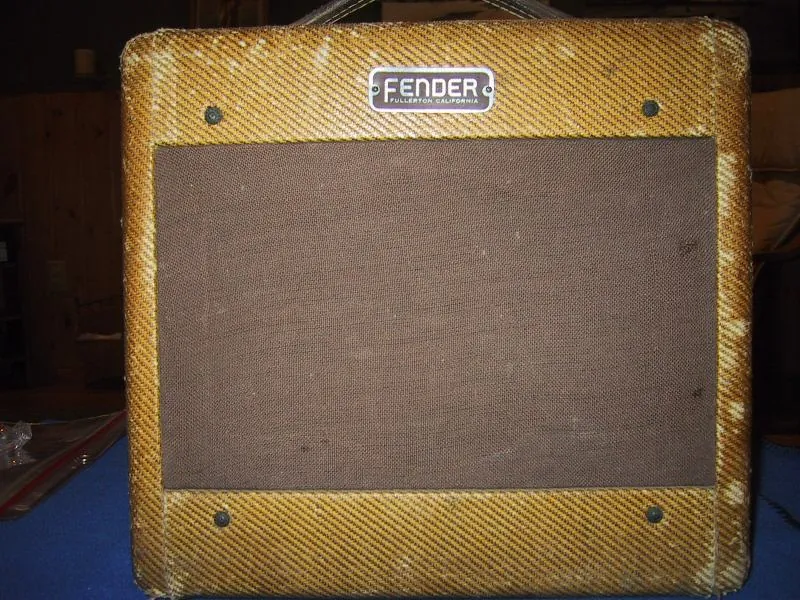
Estate buyers buy the whole lot at once, often in a single visit. This makes most sense when the amplifiers are part of a larger house clearance, or when the collection mixes hi-fi with musical instruments. That combination is common. A man who kept a pair of tube monoblocks often also kept a tweed guitar combo, a spring reverb unit, a home organ with its rotating speaker cabinet and a couple of guitars. In South Florida, for instance, estate firms that buy musical instruments for cash will usually look at the guitar amps, organs and hi-fi in the same appointment, which saves a family from booking four separate specialists. You will get less than the best private price for each piece. You will also be finished in an afternoon.
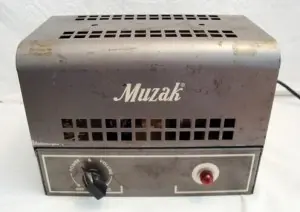
Organs deserve their own note. Hammond made the B-3 from 1954 to 1974, and a B-3 or C-3 with its Leslie speaker still has a following. Most home spinet organs do not, and many are worth less than the cost of moving them. The small amplifiers inside organs are another matter: guitarists convert them, which is why chassis like the Hammond AO-35 reverb amplifier turn up for sale on their own.
How not to sell it too cheaply
Get at least two offers before you accept one, and preferably from two different kinds of buyer. A collector's price for one amplifier and an estate buyer's price for everything are not comparable numbers, but having both tells you where the value sits.
When you research prices, look at what similar items actually sold for, not at asking prices. Asking prices on listing sites are often optimistic by a wide margin. Note the condition of the sold examples: a restored amplifier with new capacitors and a fresh set of tubes is not a fair comparison for one that has been in a garage since 1979.
Do not let the first buyer take only the best piece if you want to sell the rest. A common pattern: someone offers a strong price for the one famous amplifier, then the remaining boxes are hard to move. If the collection is going to an estate or trade buyer, ask for a price on the whole lot first and on the individual pieces second.
Keep pairs and sets together. Splitting a matched pair of mono amplifiers, or a preamplifier from its power amplifier, almost always lowers the total.
One tax point, because it surprises people. In the United States, the IRS treats inherited property as having a basis equal to its fair market value on the date of the owner's death, not what your parent paid for it in 1962. That makes a written valuation or appraisal from around that date worth having. Ask an accountant how it applies to your situation; we are not tax advisers.
Moving and shipping it without breaking it
The weight in a tube amplifier is all in the transformers, and they are bolted to a thin steel chassis. In a courier's van that chassis takes every bump. The usual damage is a cracked tube, a bent chassis around the transformer mounts, or a transformer that has torn loose and travelled around inside the box.
- Remove the tubes, wrap each one, and label which socket it came from. Pack them in a separate box.
- Double-box: the amplifier in a fitted inner box, floating in padding inside a larger outer box. Loose packing peanuts alone are not enough for something this heavy.
- Photograph each item, front and back with the serial visible, before it leaves. Keep the photographs with your sale record.
- Insure the shipment for the agreed value, and check that the carrier's insurance actually covers vintage electronics.
Organ consoles and their speaker cabinets are a different job: two people at a minimum, often a piano mover. Ask the buyer who is responsible for collection before you agree a price. With large pieces, "you pick it up" is a reasonable term to insist on.
If any equipment has to be powered up for a buyer, let someone who works on high-voltage gear do it. Tube amplifiers hold dangerous voltages inside, sometimes long after they have been unplugged.
Short answers
Should I test the amplifiers before I sell them?
No. Equipment that has been stored for decades can damage its own power transformer if it is switched on at full mains voltage. Buyers expect estate equipment to be untested and price it that way. If a buyer insists on a demonstration, let a technician bring it up slowly on a variac or dim-bulb tester.
Where do I find the model and serial number on an old amplifier?
Usually on a metal plate or paper label on the back panel, sometimes on the underside of the chassis. Photograph it for every piece. Kit-built amplifiers may show only a model number.
My father replaced some tubes over the years. Does that ruin the value?
Not on its own. Tubes wear out and were meant to be replaced. Original tubes from makers such as Mullard or Telefunken add value, so keep any old tubes you find, even if they no longer work, and tell the buyer which are original.
Is it better to sell the collection piece by piece or all at once?
Piece by piece usually brings a higher total but takes months and a lot of shipping. Selling everything to one estate or trade buyer is faster and gets the awkward items, such as organs, out of the house. Getting a price both ways before you decide shows you what the convenience costs.
How can I tell an original from a later reissue?
Check the serial number, the back-panel wording and any paperwork against known examples. Several classic designs, including the Marantz Model 7, were reissued in the 1990s with a very similar appearance. Reissues are valuable, but they sell at different prices from originals.
Do I need a formal appraisal?
For a single ordinary amplifier, comparing recent sold prices is usually enough. For a large or important collection, a written appraisal helps with both pricing and paperwork: in the United States inherited property takes a basis equal to its fair market value at the date of death. Ask an accountant how that applies to you.
Checked against: Wikipedia: Hammond organ · GuitarHQ: Potentiometer source-date codes · ECIA: EIA source codes · IRS Publication 551: Basis of Assets · Wikimedia Commons: 1957 Fender Twin, Bonhams sale 19226