Vintage tubes and testers
Amplifiers get the attention, but the original magazine also kept pages on the parts that make them work: output tubes, rectifiers, a tuning indicator, a tube manual, and the testers that sorted good tubes from bad ones. They are collected here.
If the type numbers are unfamiliar, the field guide to amplifier tubes explains how the names work and what each common type does. The tube tester guide covers the difference between an emission reading and a mutual conductance reading, which matters every time someone describes a tube as testing strong.
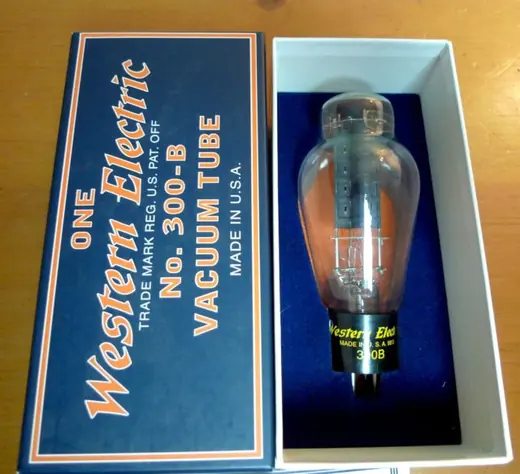 Western Electric
 300B Reissue Tube
A low-hours 300B reissue, and the story of the reissues.
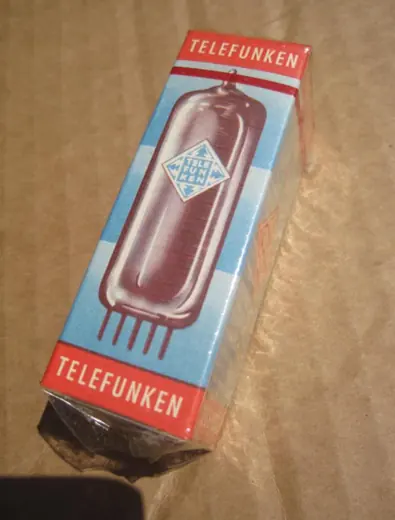 Archive
Telefunken EMM 801 Tuning Indicator Tube
A sealed magic-eye tube, the inspiration for this site's logo.
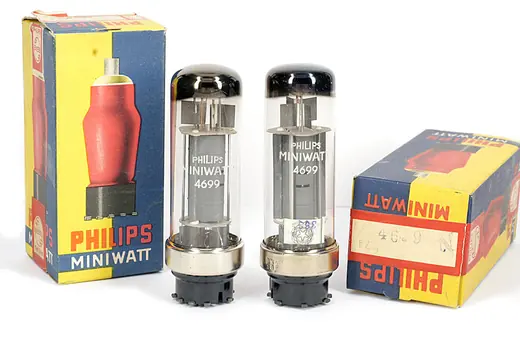 Archive
Philips Miniwatt 4699 Tubes
A boxed pair of French-made Philips Miniwatt tubes.
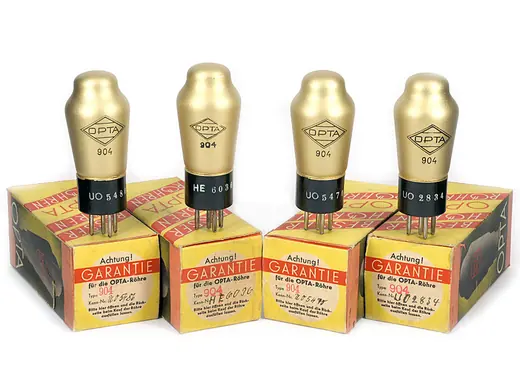 Archive
Opta Loewe REN 904 Tubes, New Old Stock
Four boxed German tubes from Loewe, the Berlin radio maker.
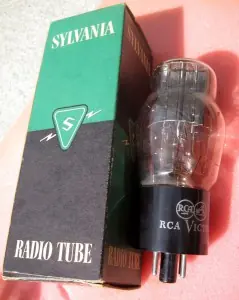 RCA
RCA 5V4G Rectifier Tube, 1949, in a Sylvania Box
A boxed 1949 rectifier, and why the rectifier type matters.
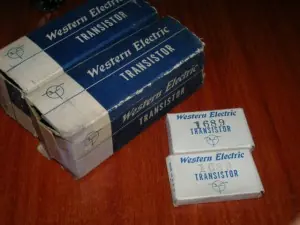 Western Electric
 1689 Point-Contact Transistors, 1953
A pair of 1953 point-contact transistors: the beginning of the end for tubes.
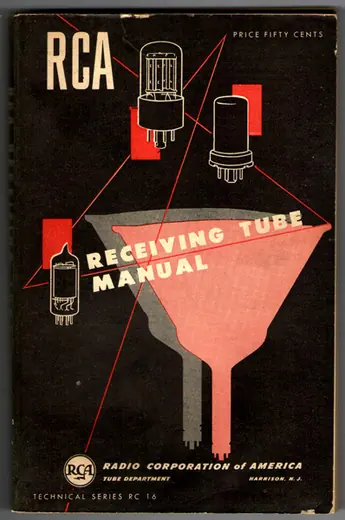 RCA
RCA Receiving Tube Manual RC-16, 1950
The reference book of the tube era: theory, testing and data for every RCA receiving type.
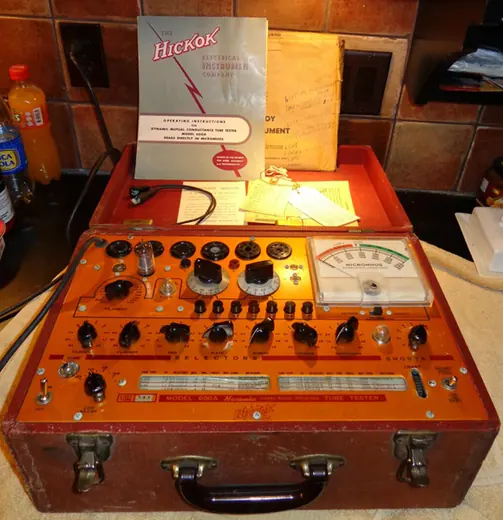 Archive
Hickok 600A Dynamic Mutual Conductance Tube Tester
The service-shop standard: a Hickok 600A, all original with its roll chart.
 Archive
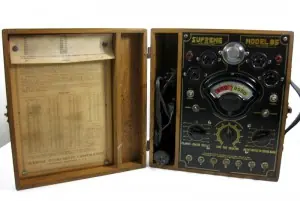
Supreme Instruments Model 85 Tube Tester
A 1930s Mississippi-made tube tester, with adapters and tube list.
 Archive
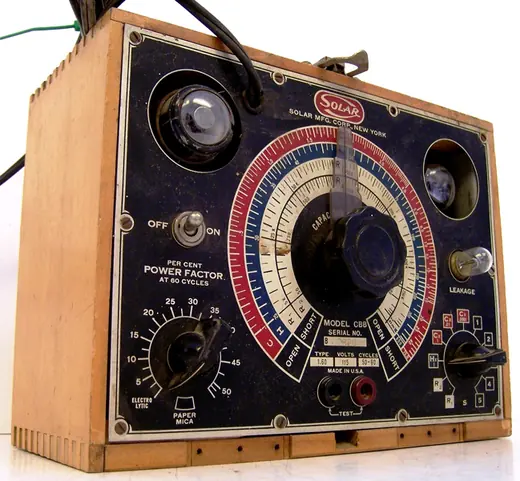
Solar Capacitor Analyzer and Resistance Bridge
A bridge-type capacitor tester with a magic-eye null indicator.
Before you browse
Does a tube that tests good on an emission tester need checking again?
Often, yes. An emission reading only shows the cathode can supply current; a mutual conductance tester checks how well the tube amplifies, which is closer to how it works in a circuit.
Are boxed new-old-stock tubes always unused?
Not always. Boxes were reused, and a tube can sit in the wrong box. Check the etched or printed codes on the glass and put it on a tester before paying a new-old-stock price.