Allied Radio, Bogen, Dynaco and EICO: the people's hi-fi
Most of the American amplifiers in this archive did not come from famous audio houses. They came from a mail-order catalogue in Chicago, a public-address firm in New York, a transformer company in Philadelphia, and a test-equipment kit maker in Brooklyn. Between them, Allied Radio, David Bogen, Dynaco and EICO put tube hi-fi into ordinary homes in the 1950s and 1960s. Their stories overlap in ways that explain a lot about the amplifiers they left behind.
Allied Radio and the Knight brand, Chicago
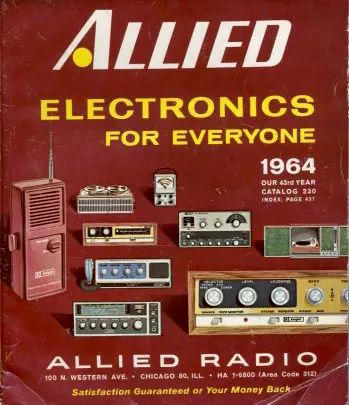
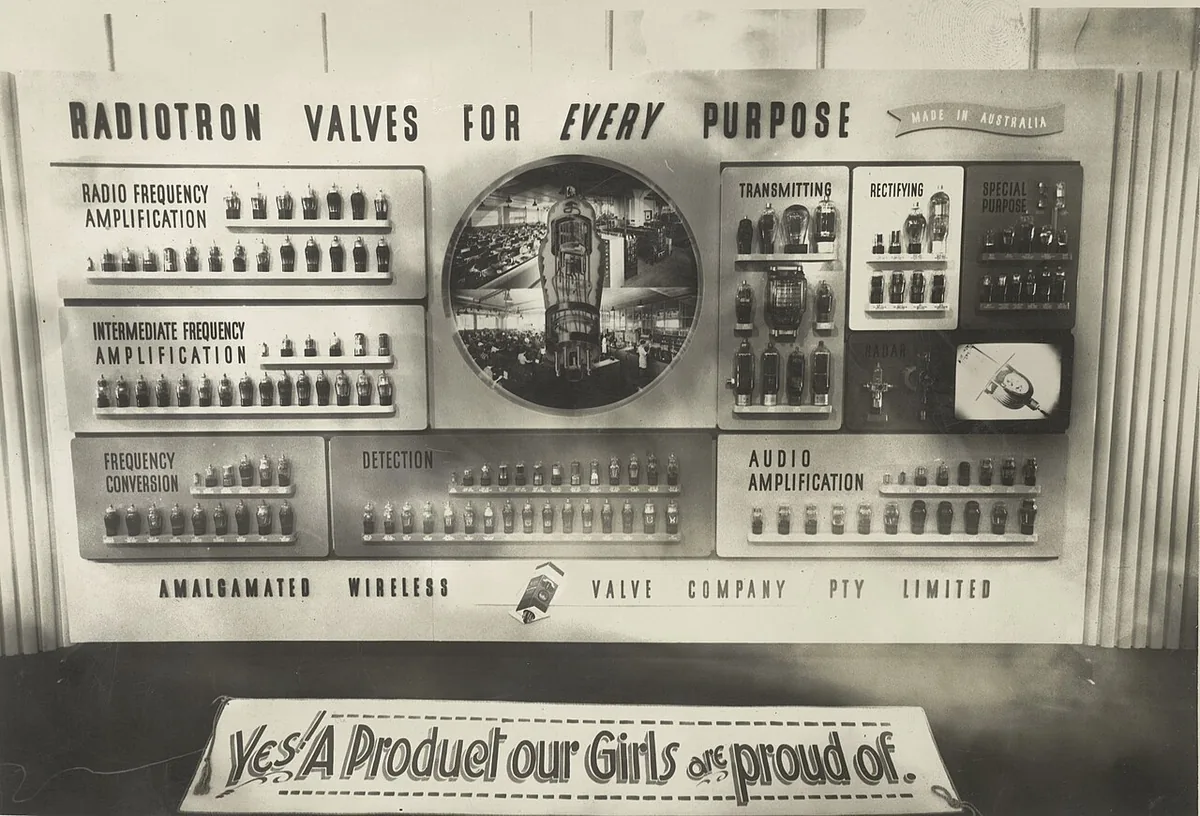
Simon "Sy" Wexler started in radio parts. He founded the Columbia Radio Corporation in 1921 and, in 1928, the Allied Radio Corporation in Chicago, originally as the radio-parts distribution arm of Columbia. Allied grew into a manufacturer and retailer that sold radio sets, tubes, capacitors, amateur radio gear, CB radios and consumer audio systems through its stores and, from the early 1930s, by catalog.
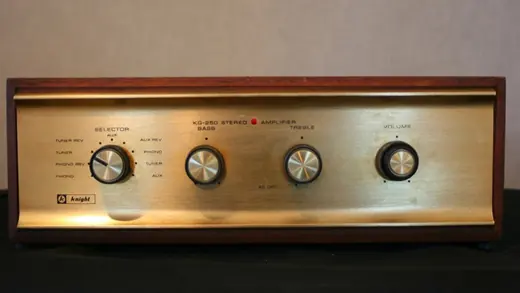
Allied's house brand was Knight. Knight amplifiers, tuners and receivers were sold both factory-built and, under the Knight-Kit name, as kits for customers to assemble. In the kit market they stood alongside Heathkit and EICO; hobby literature of the time lists Allied's Knight-Kit among the main kit suppliers. The archive's Knight and Allied Radio page covers the company itself; the Knight KG-250 is a good example of the stereo amplifiers it sold.
In 1970 the Tandy Corporation, parent of Radio Shack, bought Allied Radio, both the consumer business and the industrial division, Allied Electronics. Allied Electronics carried on as an industrial distributor, became the North American arm of Electrocomponents (now RS Group) in 1999, and since February 2023 has traded as RS Americas, headquartered in Fort Worth, Texas.
Sy Wexler's son Jerrold became a Chicago businessman and film producer. Another son, Haskell Wexler, became one of Hollywood's best-known cinematographers.
David Bogen Company: amplifiers for halls, schools and homes
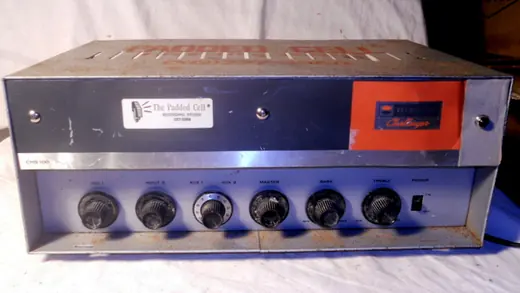
David Bogen founded his company in New York in 1932 to make intercoms and sound amplifiers, and its core business was public address: amplifiers that drove the loudspeakers in schools, factories, churches and auditoriums. That market explains the Bogen character. The amplifiers are built heavily, run conservatively, and often carry features hi-fi buyers never needed, such as multiple microphone inputs, 70-volt and 25-volt speaker-line taps, and mixing controls.
Two of the most important people in American hi-fi passed through Bogen. Bernard Kardon joined in 1937 as a design engineer, became chief engineer and later executive vice-president. Sidney Harman joined after college, designed public-address systems, and over fourteen years rose to general manager. Harman pushed Bogen to develop better consumer audio. Bogen was not interested, and in 1953 Harman left, taking Kardon with him. Each put in $5,000 to start Harman/Kardon Inc., which in 1954 introduced the Festival D-1000, billed as the world's first integrated hi-fi receiver. The archive has several Harman Kardon amplifiers, including the Citation V.
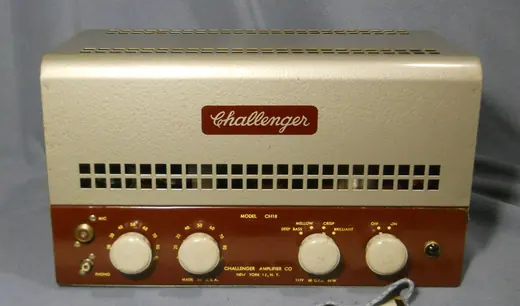
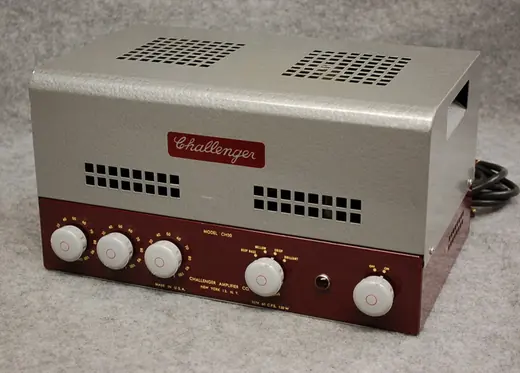
Bogen kept making professional amplifiers, and the Challenger series became its workhorse line. The archive has a run of them: the CH18, CH20, CHA-30, the MX6 mixer-amplifier, the larger CHB-100, plus the ST-10 and the Presto-Bogen DB-230. Musicians found them too: Wikipedia's article on Chicago guitarist Terry Kath notes that he recorded a part with a Fender Dual Showman preamped through a Bogen Challenger.
For a listener, a Bogen can be a bargain. Collectors tend to pass over PA gear, and the transformers in the better Challengers are generous. Check which speaker taps you are using; driving an 8-ohm speaker from a 70-volt line tap will not end well.
Acrosound and Dynaco, Philadelphia
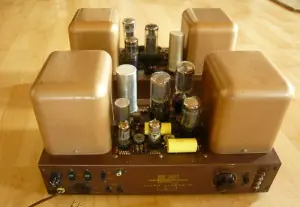
In 1950 David Hafler and Herb Keroes founded Acrosound in Philadelphia to build output transformers for home-electronics hobbyists. In November 1951 they published "An Ultra-Linear Amplifier" in Audio Engineering, taking a 1937 idea of Alan Blumlein's and showing how to tap the output transformer for low distortion without losing power. The ultra-linear guide explains how it works. The Acrosound Ultra-Linear II amplifiers in the archive come from this company.
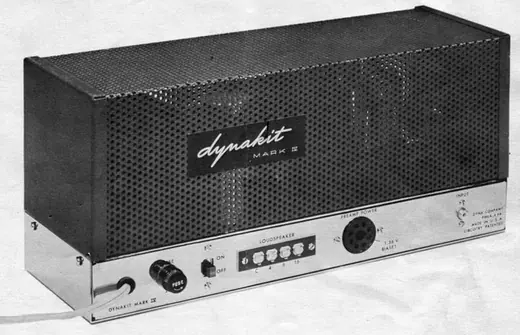
Hafler and Keroes went separate ways in 1954. In 1955 Hafler and Ed Laurent founded the Dyna Company, soon Dynaco, at 617 N. 41st Street in Philadelphia. The first product was the Mark II, a 50-watt power amplifier sold as a kit or assembled. The Mark III followed at 60 watts. In 1959 came the Stereo 70: four EL34 output tubes, 35 watts per channel, three stages, and a pre-built circuit board that made the kit hard to get wrong. Wikipedia's article on Dynaco calls it "the poor man's McIntosh" and gives a production figure of more than 350,000, though without a source. It is easily one of the most common vintage tube amplifiers you will ever see for sale.
Dynaco added the PAS preamplifiers, the 17.5-watt Stereo 35 (1963), and its first integrated tube amplifier, the SCA-35 (1964). Tyco bought the company in 1969. Hafler left in 1974 and founded the Hafler Company in 1977. Dynaco's last tube design, the Mk. VI mono amplifier, came out in 1976, and its tube amplifier production ended in 1977, ESS bought what was left in 1979, and the division closed in 1980. The name has passed through several owners since. The archive's Dynaco page and Dynaco manufacturer page follow the story.
EICO, Brooklyn
EICO, short for Electronic Instrument Company, was founded in New York City in 1945 by Harry Ashley, who ran a radio repair business. It started with test equipment in kit form; its first product was a model 113 VTVM and signal tracer, advertised in Radio News in July 1946. The company worked from 84 Withers Street in Brooklyn and later from Northern Boulevard in Long Island City, and by December 1956 it had sold more than a million instruments.
From the early 1950s to the mid-1960s EICO also sold hi-fi: tuners, preamps and amplifiers, as kits or assembled. The archive has the HF-20, the HF-89 and the ST-40, plus a company page under EICO New York. EICO left audio in the late 1970s and was liquidated in 1999.
The common thread
These companies shared customers. The same hobbyist who bought a Knight-Kit from the Allied catalogue might wind his own amplifier around an Acrosound transformer, check his tubes on an EICO tester, and hear a Bogen every morning over the school PA. Kits made the equipment cheap; catalogues made it available far from big-city hi-fi shops; and the professional sound market kept the transformer makers busy.
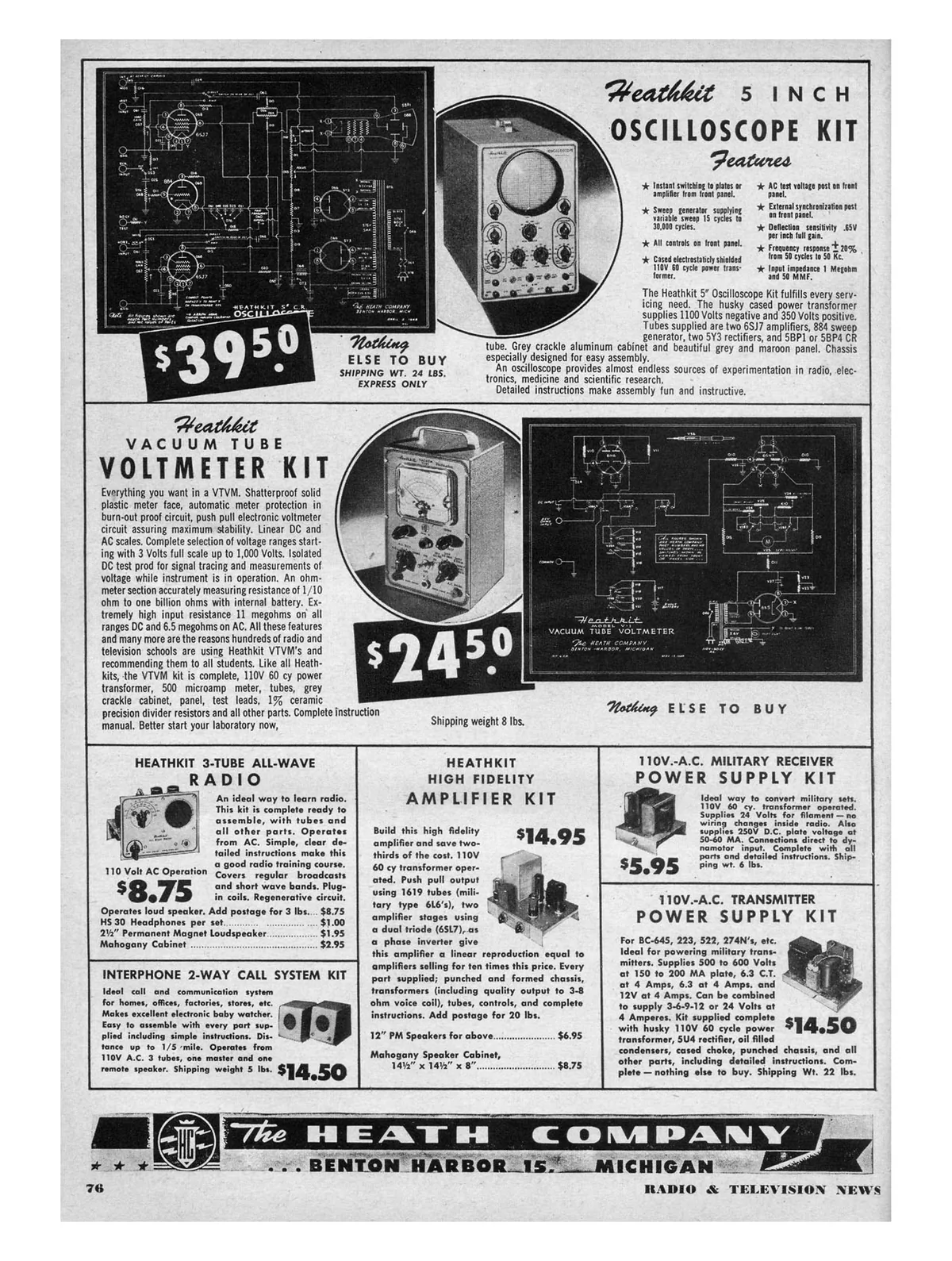
For buyers now, that history has a practical meaning. Kit-built amplifiers vary with the skill of their original builder, so inspect the solder joints. Factory-wired versions of the same models usually fetch more. And because so many were made, service manuals, schematics and replacement parts for Dynaco, EICO, Knight and Heathkit amplifiers are easier to find than for many far more expensive brands. Heathkit, the other giant of the kit trade, sold its first electronic kit, an oscilloscope, in 1947 and stopped making kits in March 1992; the archive's Heathkit W4-AM and XO-1 crossover belong to that line.
If you want to write up the history of one of these amplifiers yourself, the paper trail is unusually rich: Allied catalogues, Dynaco and Heathkit manuals, magazine reviews and advertisements. Cite them by issue and page so that the next collector can check your dates. A footnote style such as Chicago notes and bibliography copes well with catalogues, manuals and magazine issues.
Short answers
When was Allied Radio founded and what happened to it?
Simon Wexler founded Allied Radio in Chicago in 1928. Tandy Corporation, the parent of Radio Shack, bought it in 1970. The industrial division, Allied Electronics, became part of Electrocomponents in 1999 and has traded as RS Americas since February 2023.
What was the Knight brand?
Knight was Allied Radio's house brand for radios, amplifiers and other equipment. Knight-Kit was the name used for the kit versions customers assembled themselves.
Who founded Dynaco?
David Hafler and Ed Laurent founded the Dyna Company in Philadelphia in 1955. Hafler had earlier co-founded Acrosound with Herb Keroes in 1950.
How is Harman Kardon connected to Bogen?
Sidney Harman and Bernard Kardon both worked at the David Bogen Company. When Bogen declined to develop better consumer audio, Harman left in 1953, took Kardon with him, and they founded Harman/Kardon.
Checked against: Wikipedia: Jerrold Wexler · Wikipedia: RS Americas · Wikipedia: Amateur radio homebrew · Wikipedia: Sidney Harman · Wikipedia: Bernard Kardon · Wikipedia: Dynaco · Wikipedia: Eico · Wikipedia: Heathkit · FundingUniverse: Bogen Communications history